
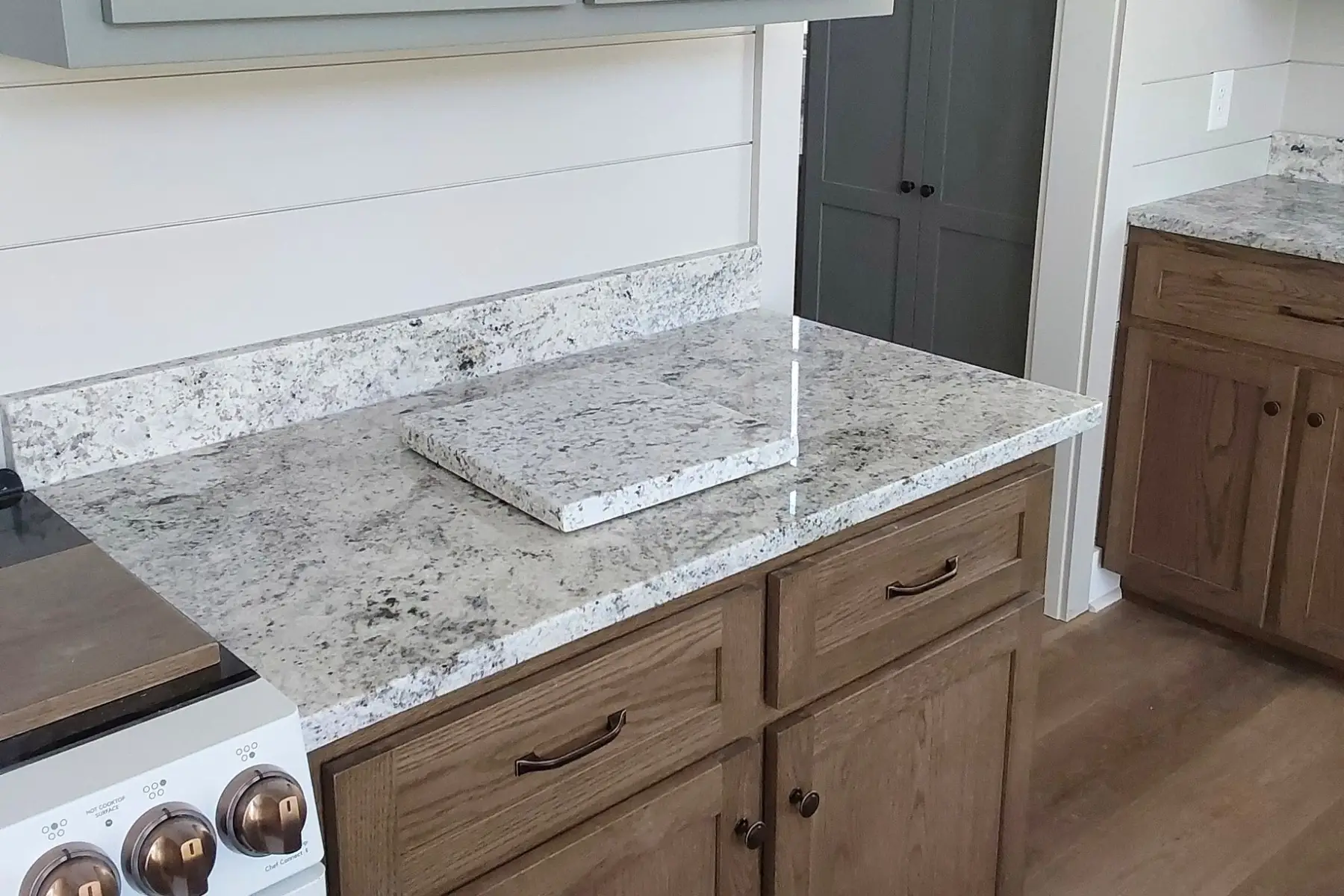


One of the most beautiful features of natural stone countertops is veining. From the soft gray lines running through white marble to the dramatic movement found in quartz and some granites, these patterns are part of what makes natural stone so eye-catching.
But have you ever wondered what actually causes those veins? Natural stone is shaped by heat, pressure, shifting rock, minerals, and fluids beneath the Earth’s surface. Depending on the type of stone, the lines we call “veins” can form in several different ways.
What Is a Vein in Natural Stone?
In geology, a true mineral vein forms when a fracture or opening in rock becomes filled with minerals. The National Academies explains that fractures and faults can become filled with minerals and form veins.
As geological forces stress rock, small cracks develop. Mineral-rich fluids travel through those openings, and over time, the minerals fill the space. The result causes a contrasting line that runs through the stone.
Some veins are thin and subtle, while others are dramatic, stretching across an entire slab. They may be white, gray, black, gold, brown, green, or another color depending on the minerals present.
What Causes Veining in Marble?
Marble begins as limestone or dolomite that is transformed by heat and pressure. During this metamorphic process, the minerals in the original rock recrystallize.
Marble’s beautiful color variations are influenced by impurities present when the stone formed. Oregon State University’s Volcano World explains that these impurities can create marble in shades ranging from white and gray to red, black, pink, and green. These mineral differences also can contribute to the bands, swirls, and contrasting patterns associated with marble. That is why two slabs of marble, even slabs quarried from the same area, may look very different.
What Causes Veins in Granite?
Granite has a different geological origin. It is an igneous rock that forms as molten rock slowly cools and crystallizes beneath the Earth’s surface.
Granite is made up of several minerals, including quartz, feldspar, and mica. The size, concentration, and arrangement of those minerals help create granite’s characteristic speckled or flowing appearance.
Like marble, some granite slabs also contain distinct vein-like features. Geological stress fractures the existing rock, allowing minerals to fill those spaces and create lines that contrast with the surrounding granite. As a result, granite can range from relatively consistent patterns to dramatic slabs filled with movement.
What Causes Veining in Quartz?
Quartz is a naturally occurring mineral found throughout the Earth’s crust. The distinctive veining in quartz slabs forms when pigments and mineral variations produce everything from subtle lines to bold, sweeping patterns. As a result, quartz countertops can look more consistent in color and pattern from one slab to another.
Are Veins in Natural Stone Cracks?
It is easy to imagine why someone would look at a line in natural stone and assume the stone is cracked. However, natural veins and fissures are geological features that are a part of the stone.
A vein may contain minerals that filled an ancient fracture long before the stone was quarried. That is different from damage that occurs after the stone has been fabricated or installed. Natural stone professionals know how to examine slabs, identify their natural characteristics, and determine the best way to cut and fabricate them into a countertop.
Why Does Veining Vary From Slab to Slab?
Because natural stone forms through geological processes, no two pieces are exactly alike. Even slabs cut from the same block can have different patterns depending on where the vein passes through the stone. One slab may have quiet, subtle movement. Another may contain sweeping veins or dramatic contrasts. That variation is part of natural stone’s appeal.
Choosing natural stone lets you select an individual slab that fits your taste and lifestyle, rather than simply choosing a color or pattern from a catalog.
Can You Choose Where the Veins Appear on Your Countertop?
Once you select your slab, countertop layout and fabrication can help determine where prominent veins appear in the finished project. For example, you might place a dramatic section of stone on a kitchen island to make it a focal point. When multiple pieces are required, careful planning may also help create visual continuity between adjacent sections.
This is one reason selecting an experienced natural stone fabricator matters. Fabrication is about more than cutting a slab to the right dimensions. It involves understanding how the stone will work within the finished space.
Natural Veining Makes Every Countertop Unique
The veins running through natural stone aren’t simply designs printed on its surface. They reflect geological processes that took place over an extraordinary amount of time. Heat, pressure, mineral composition, fractures, and mineral-rich fluids can all contribute to the patterns we see in marble, granite, and quartzite. Those natural variations mean your countertop can have a character all its own.
Considering New Natural Stone Countertops?
If you’re contemplating installing new natural stone countertops for your kitchen, bathroom, or another space, Spectrum Stone Designs can help you explore granite, marble, quartz, and other options and find a slab that complements your home, office, or other space.
Serving Lynchburg, Roanoke, Charlottesville, and communities throughout Central Virginia, Spectrum Stone Designs expertly fabricates and installs beautiful countertops that showcase the stone’s natural characteristics.
Spectrum Stone Designs is Lynchburg’s leading fabricator of natural stone countertops, surrounds and tiles for kitchens, fireplaces and baths. Serving Lynchburg, Roanoke, Charlottesville and all of Central Virginia, Spectrum Stone Designs imports top-quality granite, marble and other stone and expertly cuts and polishes before professionally installing in homes or offices. Spectrum Stone Designs strives for excellence in craftsmanship and customer service.